
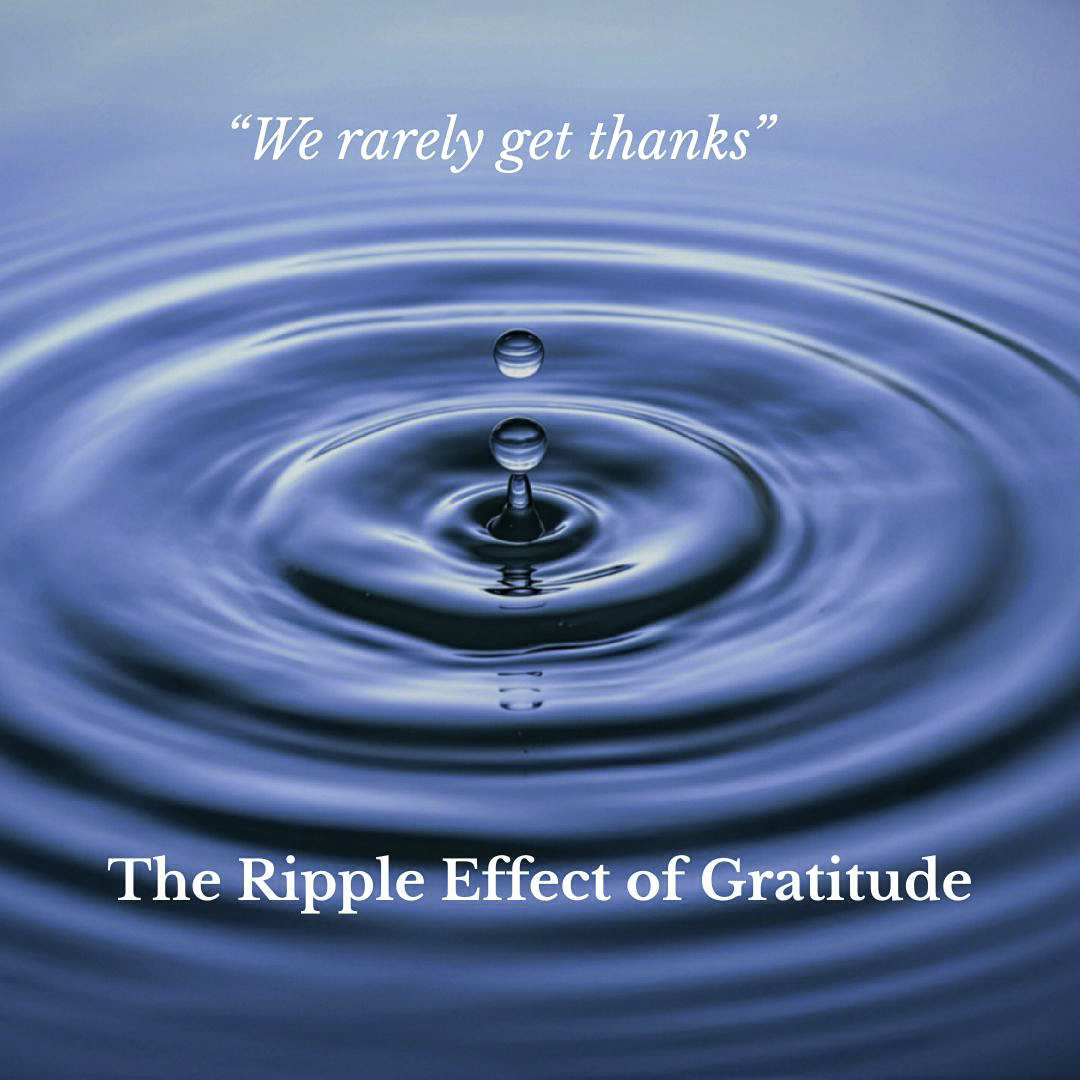
June 7, 2026: The Ripple Effect of Gratitude
“we rarely get thanks”
When was the last time you said thank you……and sincerely meant it?
Recently, I underwent a medical procedure that required spending the day in a hospital care unit. Throughout the day, I was struck by the compassion, professionalism, and kindness of the staff caring for patients, from the volunteer who wheeled me down the hallway to every member of the medical team.
As I often do when I receive exceptional service, I decided to express my appreciation not only to the caregivers themselves, but also to their supervisors. I had even asked for the names of the staff members who had cared for me throughout the day so I could thank them individually. While I was writing a note through the hospital’s website, one of the nurses came into my room. When she asked what I was doing, I shared a lesson my mother taught me many years ago:
“When someone provides excellent service, thank them; but also take it a step further and let their supervisor know.”
The nurse smiled, nodded, thanked me and then quietly said something that stayed with me long after I left the hospital.
“We rarely get thanks.”
Her softly spoken words reminded me how important it is not only to feel gratitude, but to express it.
Those who work with the public often hear complaints far more frequently than compliments. Most of us genuinely appreciate the people who help us, but our lives are busy, and taking a few extra minutes to write a note, send an email, or speak to a supervisor can feel like one more task added to an already full day. Yet research suggests that gratitude benefits everyone involved. Studies have shown that expressing appreciation can lower stress, improve well-being, and strengthen social connections. Even more fascinating, recent research suggests that people who simply witness an act of gratitude experience positive effects as well.
I was reminded of this not long ago while shopping with my teenage granddaughter.
The cashier carefully wrapped several frames I was purchasing for my artwork. When I thanked her for taking such care, she shyly told us it was her first day on the job. I replied that she was doing a wonderful job and that I wanted her supervisor to know. As the supervisor approached, I noticed her expression seemed to anticipate yet another complaint. Perhaps it was simply my imagination, but it reminded me how often those in customer service are called upon to solve problems rather than hear praise.
But when I complimented her employee and shared how pleased we were with the service, her entire demeanor changed. Her shoulders relaxed. Her face brightened. She smiled.
Afterward, my granddaughter turned to me and said, “Did you see that, Nonny? Her whole face and body changed….from a grumpy look to a smile.”
Yes, it took only a few minutes. And sometimes that is all that we need….to write a note, speak to a supervisor, acknowledge someone’s effort.
But these few minutes can create something larger than we can realize. They can send out ripples of encouragement, joy and the understanding that what we do matters.
My mother understood that years ago. I hope that lesson is one of the many gifts passed from one generation to the next. And perhaps that’s the real ripple effect of gratitude. Not just because it makes us feel better, but that a sincere thank you can travel farther out than we ever can know.
So today, who might need to hear yours?
Thank you for joining me for this week’s Weekly Wanderings. If this reflection resonated with you, please consider shasring it with someone who might find it meaningful. Until next time, I hope you find joy in life’s simple moments and never underestimate the difference that a small ripple of kindness can make.
In peace and harmony,
Wendy Oellers-Fulmer
A few inspirational thoughts to leave you with:
“Kind words can be short and easy to speak, but their echoes are truly endless.”
— Mother Teresa
“The deepest principle in human nature is the craving to be appreciated.”
— William James
“Feeling gratitude and not expressing it is like wrapping a present and not giving it.”
— William Arthur Ward